

























Skip to content
Smart Data
A glowing AI chip on a grid of dark processor blocks

AI

AI development services

Our engineers work with current AI coding agents to modernize legacy code and ETL, ground language models in your own data so every answer can be checked, and design for private models where the data has to stay in your environment.

Our AI services

What our engineers build with AI

AI-assisted modernization is where we have client results today. AI on your data and private models are how we approach what comes next. Each starts from the data and systems you already run.

AI-assisted modernizationLegacy code and ETL moved forward with AI agents and engineers working together

AI-assisted development and modernization

Our engineers work with current AI coding agents on the slow, high-volume parts of modernization: upgrades, remediation, conversion and the tests around them. On one recent engagement that work closed 620+ known vulnerabilities, took Angular 16 to 21 and .NET to version 10, and started consolidating duplicate codebases into one multi-tenant application.

  • Vulnerability remediation and framework upgrades across whole application portfolios
  • Legacy ETL converted into tested Databricks pipelines, with unit tests generated alongside every conversion
  • Findings checked against an independent source, such as a second vulnerability database
  • Angular
  • .NET
  • Databricks
AI-assisted modernization
AI on your dataAnswers from enterprise data that can be checked

AI on your data

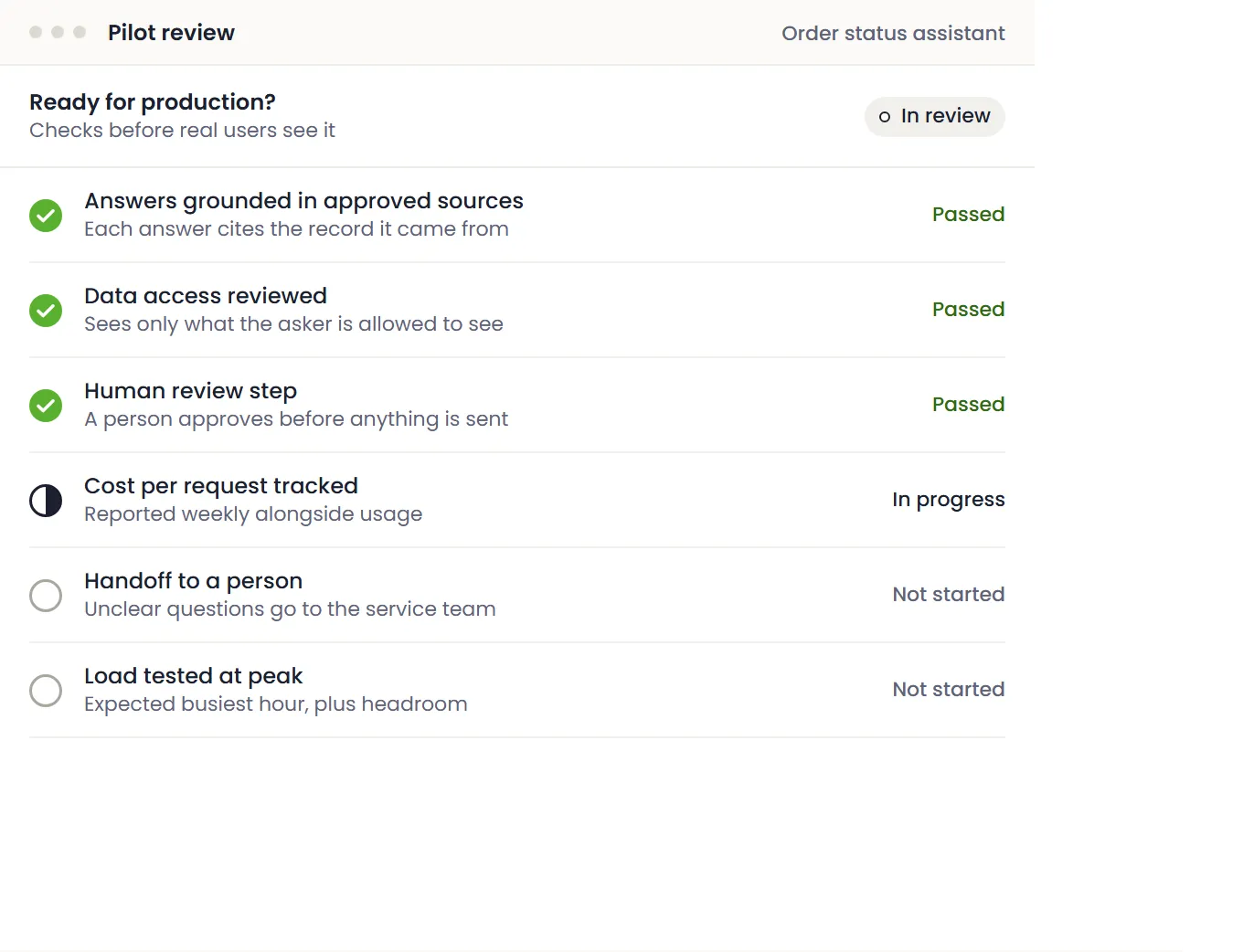
We ground language models in your schema, your business definitions and your access rules, so an answer to a business question comes with the query that produced it and can be verified before anyone acts on it.

  • Schema-grounded SQL generation, with the generated query shown alongside every answer
  • Governed access: the model sees only what the person asking is allowed to see
  • Search and summarization over your own documents, with sources cited
  • Databricks
  • Microsoft Fabric
  • Snowflake
AI on your data
AI in your applicationsModel features inside the applications your people already use

AI built into production applications

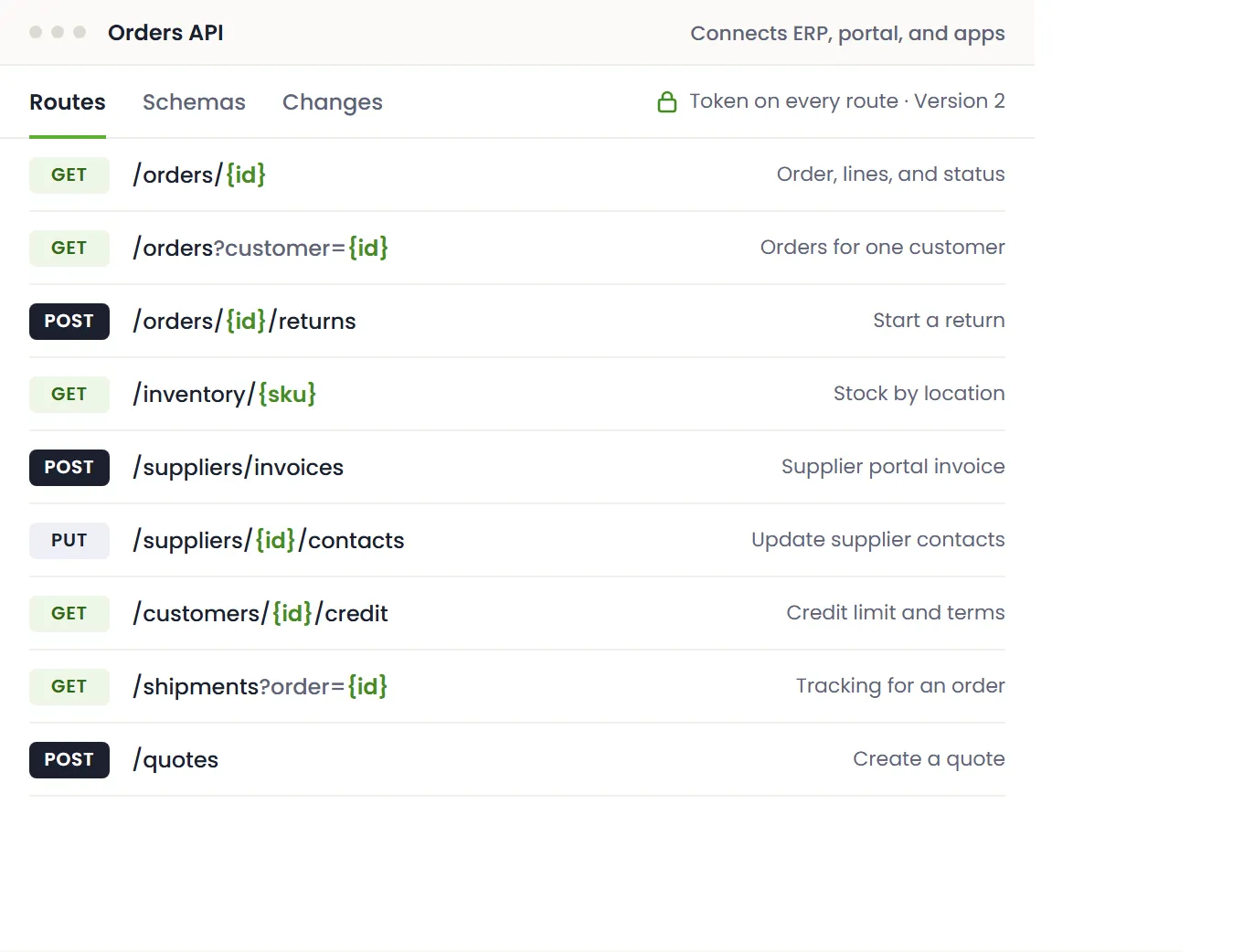
We build language model features into working applications, from content generation and summarization to extraction from forms and documents, and connect them to the systems and data those applications already depend on.

  • OpenAI and other model APIs integrated into production applications
  • Extraction and summarization from forms, documents and records
  • Features deployed on Azure, AWS or GCP inside your existing security model
  • OpenAI
  • Azure
  • AWS
  • GCP
Private models and AI costModels that stay in your environment, at a cost you can predict

Private models and AI cost control

Not every workload belongs on a public model API, and not every question needs the largest model. We run private and locally hosted models where data cannot leave your environment, and route each task to the right-sized model so the cost and accuracy of every answer are known before the bill arrives.

  • Private and locally hosted models for regulated or sensitive data
  • Model routing that matches each task to the right-sized model
  • Cost and accuracy measured before an AI workload reaches your lakehouse at scale
Private models and AI cost
AI strategy and roadmappingWhere AI fits, what your data can support and what comes first

AI strategy and roadmapping

We rank AI use cases by business impact and by whether your data can support them, then lay out a phased roadmap.

  • Use cases ranked by business impact and data readiness
  • Feasibility of internal or vendor-based AI, assessed against your systems
  • Governance, success metrics and delivery model defined up front

Our own practice

How we use AI ourselves

We build with the same tools we recommend, under written rules about cost and data.

  • Our own apps, built with AI

    We’re replacing our time-tracking and billing tool with apps built entirely with AI. Testers log bugs in Slack, an AI picks each one up, fixes, tests and redeploys it, and a person tests it before it’s marked done. They roll out across our companies from November.

  • The right model for each task

    On our own builds, a small model sorts each task by difficulty and routes it to the model that suits it, so the largest models do only the work that needs them.

  • Your data stays protected

    Training on your data turned off, your contract’s AI terms always win, including zero data retention, and US-based providers only.

  • Your tools in your environment

    When our engineers work inside your environment, they use the AI tools you provide, and never use company accounts on your data without your permission.

AI Enablement GuideA guide from Smart Data

How this connects to AI

Not sure your data is ready for AI?

Most AI initiatives fail because they start with the technology instead of the data foundation. The AI Enablement Guide covers what the ones that succeed do differently, and how to assess your own readiness.

Our approach

Workshop, prove, scale

We prove value before scaling investment. Three phases, each with a clear scope and an exit ramp. You decide whether to proceed at each step.

  1. 01

    01Workshop

    One to two weeks on your data, systems and use cases. It answers three questions: what data do you have, what can it support today and what needs to change before your target use cases become viable.

    Deliverable

    A readiness scorecard, a 90-day roadmap of use cases ranked by impact and data readiness, a recommended architecture and a scope for the first build.

  2. 02

    02Prove

    A proof of value is a working system on your production data that produces a measured business outcome.

    Deliverable

    A working prototype against production data, measured business outcomes and a production deployment plan.

  3. 03

    03Scale

    Ongoing

    Production deployment with monitoring, governance and ongoing team support. Managed services, staff augmentation or hybrid delivery based on your team’s needs.

Scoped projects, staff augmentation or managed support after launch.See how we deliver

Industries

Industries we work in

A few practical questions

Questions about AI development

What buyers usually ask before an AI engagement starts.

Ask us about your situation
What AI development work does Smart Data do?

Advisory on where AI fits, and the engineering to build it into the systems you already run: assistants and search over your own documents, extraction from forms and invoices, generative features inside existing applications, and AI-assisted modernization of legacy code and ETL. Every build starts from the data it depends on.

What is the difference between AI advisory and AI development?

Advisory work identifies the AI opportunities worth pursuing, checks whether your data can support them and sets the roadmap. Development is the engineering: integrating models, building the application around them and deploying to production. We do both, so the roadmap is one we know how to deliver.

Can AI work inside our existing enterprise systems?

Yes. We build AI into the platforms clients already run, such as Microsoft Fabric, Databricks, Snowflake, Azure and AWS, and it has to respect the data governance, security and operational workflows already in place.

How is AI development scoped and priced?

In phases. The workshop maps the opportunities and assesses data readiness, and the proof of value runs on your real data. Each phase is scoped on its own once we understand the use case and the data behind it, and each ends with a decision about the next.

SD Labs

We build with AI on our own software too

Our own time and invoicing apps were written mostly by AI agents, with a team around them. See how, and what else our engineers build, on SD Labs.

Visit SD Labs (opens in a new tab)

Next step

Where should AI prove itself first?

Tell us the use case you have in mind and the data behind it. Here is what happens after you reach out.

  1. A short call about the use case and its data

    What you want AI to do, the data it would run on and how you would measure it.

  2. An engineer looks at what’s running

    Scope comes from your systems as they are, before anything is priced.

  3. You get a written proposal

    Covering scope, team, approach and price.

info@smartdata.net(937) 886-9166

Tell us what you are working on

We use your details only to reply.

Your privacy choices

Choose what this browser shares with us. The site works the same either way. Privacy policy