National distributorDistribution
Customer portals secured and upgraded
620+
known vulnerabilities eliminated

AI
Our engineers use Claude and other current models on the slow, high-volume work in older estates: security backlogs, framework upgrades, codebase consolidation and legacy ETL. Here is what that looked like on two client engagements. “I attribute much of the quality of the work and especially the compressed timeline to Smart Data’s mastery of AI,” the client’s IT leader wrote.
620+
known vulnerabilities eliminated















Two engagements, in detail
Upgrades, remediation and conversions are where AI changes the work most: there is a lot of it, the details matter, and tests and scanners can confirm each change. Security remediation, framework upgrades and codebase consolidation come from the distributor engagement, and legacy ETL conversion comes from the retailer.
Vulnerability and security remediation
Scanner findings, open penetration test items and the dependency debt behind them, closed across whole application portfolios. On one engagement for a national distributor, that meant more than 620 known vulnerabilities eliminated and every penetration test finding remediated, with results cross-checked against a second vulnerability database that surfaced issues the first scanner missed.
Framework and runtime upgrades
Applications several major versions behind are a security problem before they are a feature problem. We bring frameworks and runtimes current: on the distributor’s portals, Angular 16 to 21 and Azure Functions from the .NET 6 in-process model to the .NET 10 isolated worker, with Angular bundles about 50 percent smaller.
Codebase consolidation and multi-tenancy
Many estates carry the same application deployed once per customer or business unit, each copy drifting and each one billed. We consolidate them into one multi-tenant set of services, so a new customer means a new database rather than a new suite of cloud resources. For the distributor, five to six copies of one codebase are moving onto one multi-tenant platform, with about $78K a year in projected savings.
Legacy ETL conversion to Databricks
For a major national retailer we built an AI-assisted migration tool, using Claude and structured prompts, that converts legacy ETL logic, orchestration scripts and deployment configurations into PySpark pipelines on Databricks. Unit tests and infrastructure as code are generated with every conversion, and in the first phase the tool handled 78% of the legacy transformation types.
The retailer migration tool
The retailer had hundreds of legacy workflows and orchestration jobs. We built a tool on Claude and structured prompts instead, and tested it across a real cross-section of the estate in a three-month first phase.
31 workflows, 36 mappings, 60 orchestration jobs and 50 shell scripts, drawn from live domains rather than a curated sample.
Legacy ETL logic, orchestration scripts and deployment configuration converted into PySpark pipelines on Databricks.
Unit tests, plus Terraform and GitHub Actions deployment code, generated alongside every converted pipeline.
Senior engineers validate output against known behavior instead of translating by hand, and the platform team can run what they review.
Industries

Patient, pharmacy and clinical data systems held to HIPAA, including where AI is allowed to touch them.
Clients include


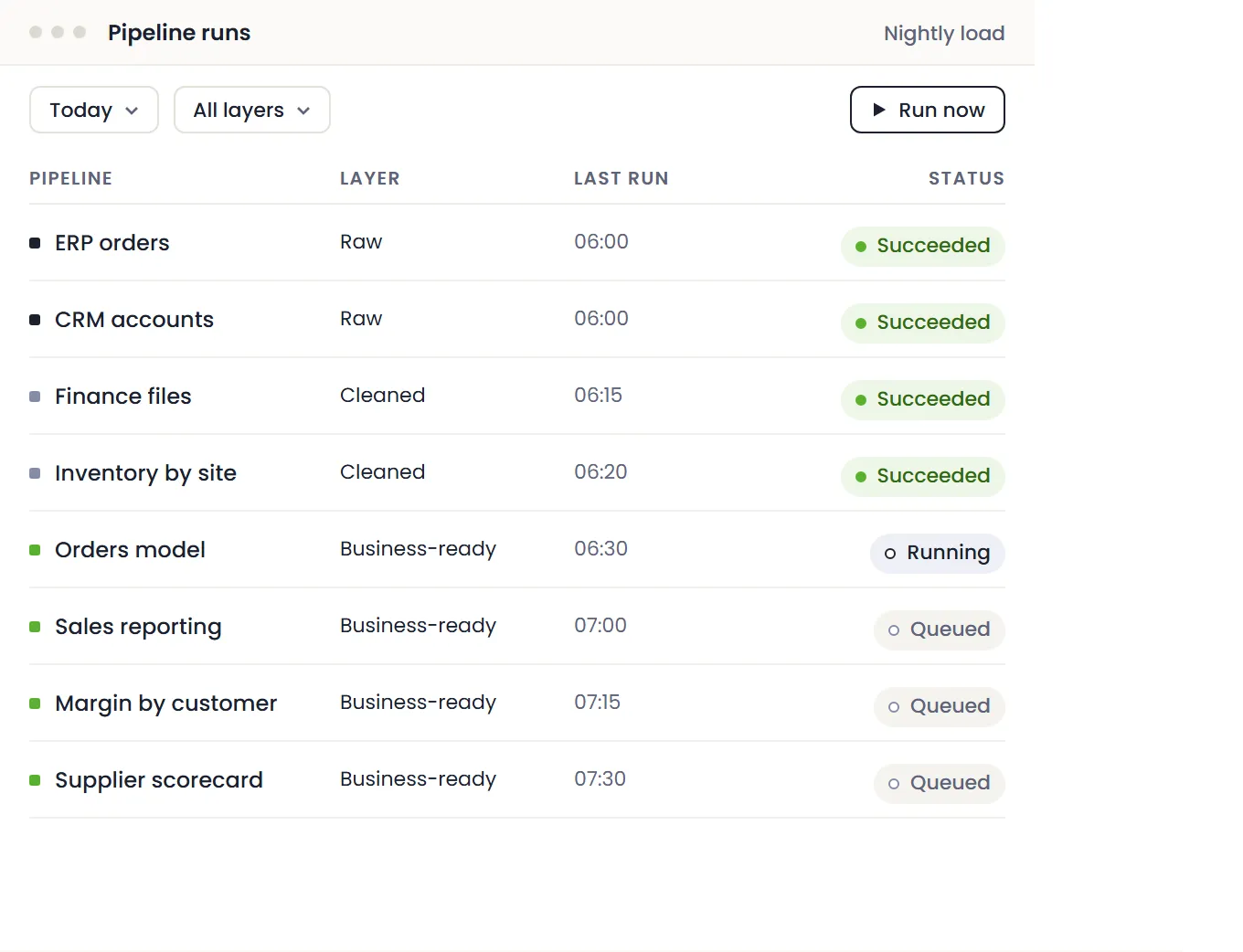
ERP, shop-floor and supplier data on one platform, so plant reporting and finance reporting reconcile.
Clients include


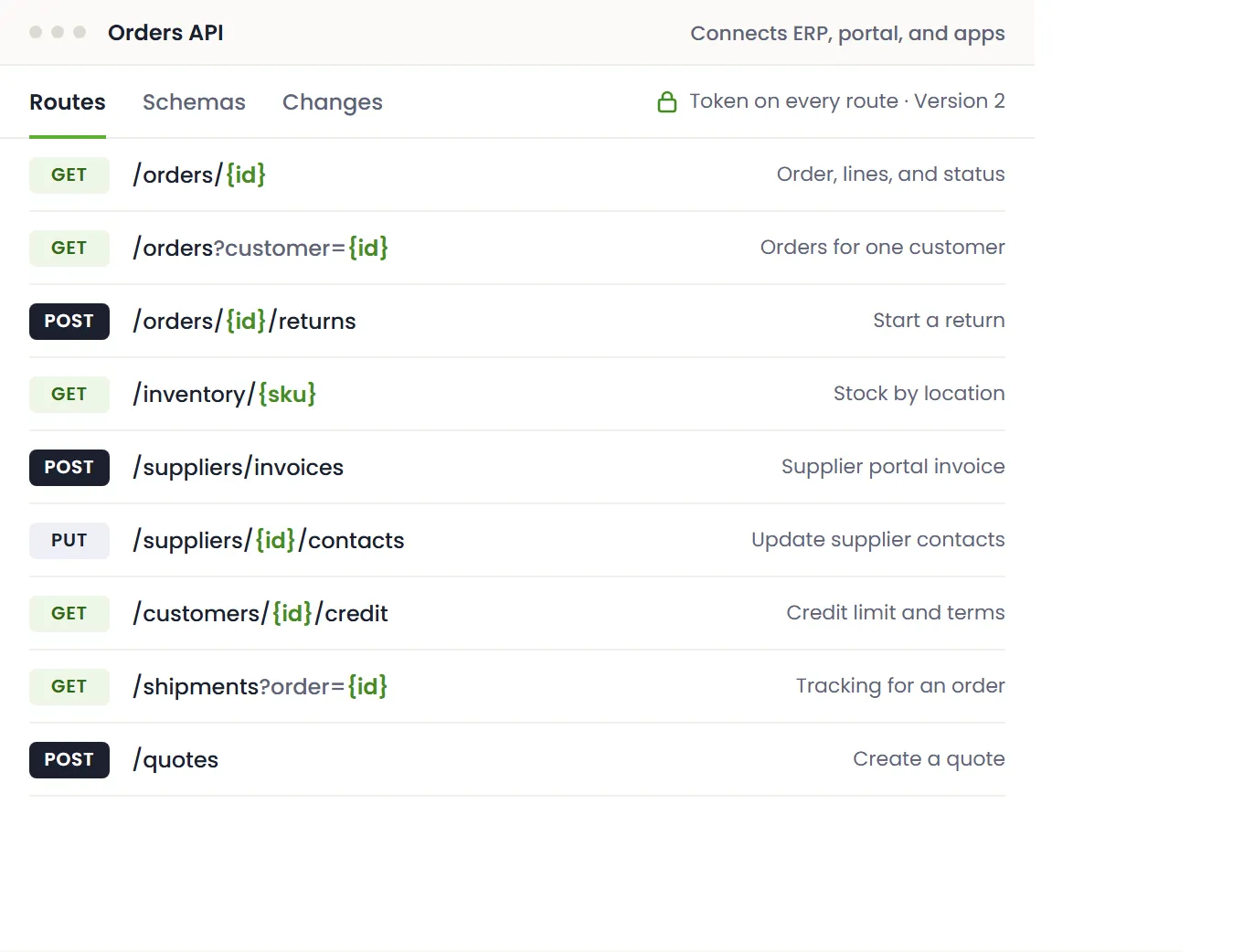
Order, inventory, credit and customer data connected across portals, branches and the platforms behind them.
Clients include


Bank data platforms, reporting that holds up to an audit and managed support for the financial systems the business runs on.
Clients include

Claims, member and policy systems for health plans and insurers.
Clients include
Case studies
 Retail and distribution

620+
One AI-assisted senior engineer closed every known vulnerability ahead of plan, then started consolidating five to six copies of the codebase into one set of services. About $78K a year projected, over $25K a year already realized.
 Retail
78%
An AI-assisted tool that converts legacy ETL into tested Databricks pipelines. In a three-month first phase across 177 legacy jobs and scripts, it handled 78% of the legacy transformation types, with tests generated alongside every conversion.
 Distribution

Winsupply’s IBM RPG order management, moved to an Angular and Java web platform where customers manage their own orders and see their supply chain.
A few practical questions
What engineering leaders usually ask before the first codebase is opened.
Ask us about your situationMostly Claude, with other current models where they suit the task better. The retailer migration tool runs on Claude with structured prompts. We only use AI tools with training on your data turned off, and if your contract restricts AI or requires stricter handling, your contract wins.
On the distributor’s portals, every commercial scanner finding was closed, the results were cross-checked against the open-source OSV database, which surfaced real issues the scanner missed, and every penetration test finding was remediated.
Yes. Both engagements on this page were on software someone else wrote, years earlier. Getting the current behavior pinned down, and writing tests where they are missing, comes first.
Usually small and specific: one codebase and its backlog, or a first phase of a migration. The distributor engagement started with the security backlog and grew into the consolidation.
No. Those are the stacks on these two engagements. The same approach works on other stacks, and our modernization work from before today’s AI tools reaches IBM i and VB6 desktop software.
Related services
Governed, private AI that answers questions from your own data, with the query behind every answer.
Learn moreLanguage model features built into the applications your people already use.
Learn moreCustom applications, portals and cloud-native rebuilds of the software that runs the business.
Learn moreLakehouse architecture and legacy ETL migration with AI-assisted conversion and generated tests.
Learn moreNext step
Tell us what it runs on and what is holding it back. Here is what happens after you reach out.
What it runs on, what the scanners say and what is driving the timing.
Scope comes from your systems as they are, before anything is priced.
Covering scope, team, approach and price.

 Angular
 .NET Core
 Databricks
 Claude
 Java
 Spring Boot