We build governance into the data platform, so it’s safe to point reports, analysts and AI at your data: quality rules in the pipelines, lineage from source to report and access tied to how sensitive the data is.
AI has made governance urgent: models, retrieval pipelines and automated workflows are reading data that often hasn’t been classified, access-controlled or quality-checked.
Data quality
Data quality frameworks
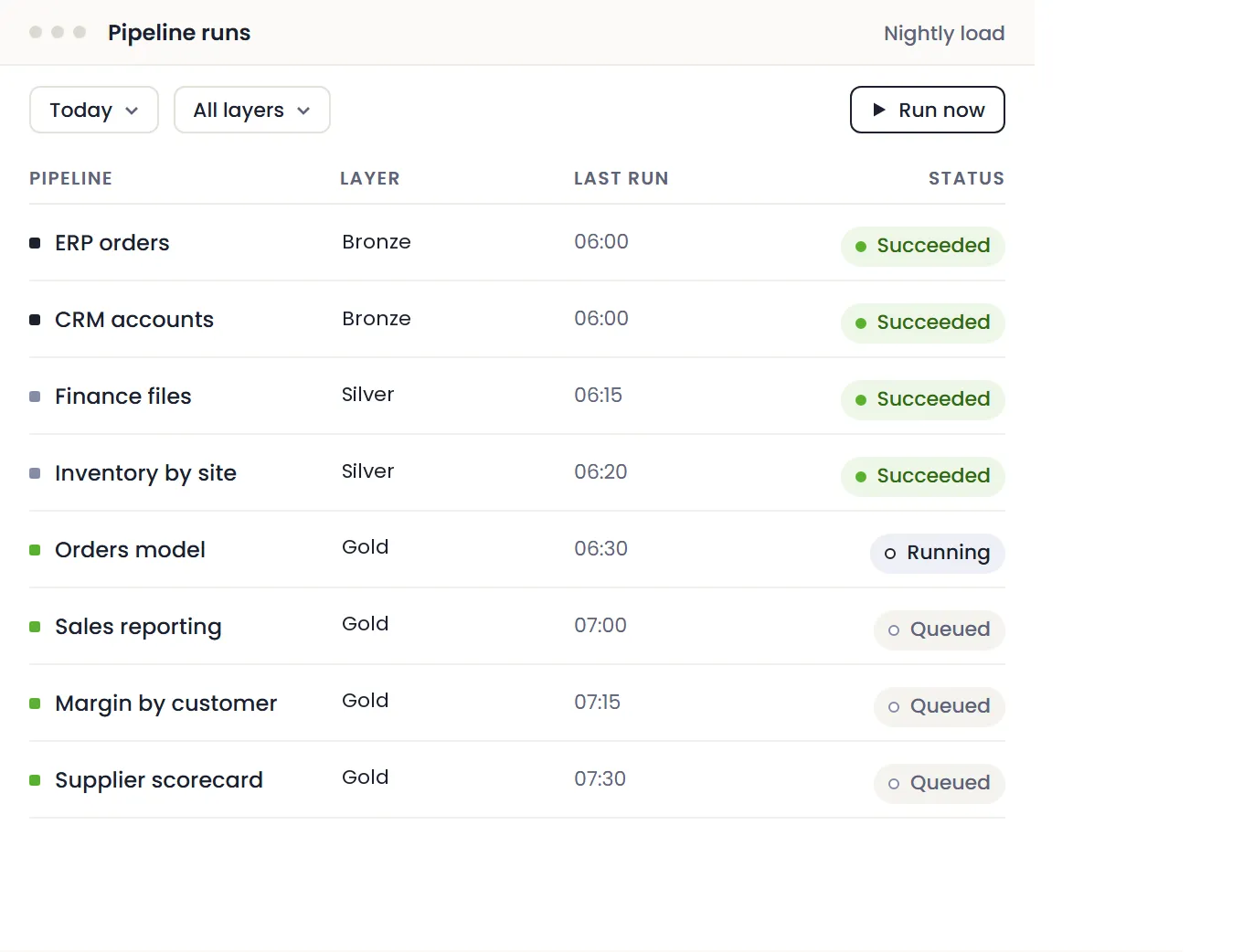
Quality rules define what good data looks like at the source, check it as it moves through the pipelines and raise failures before they compound. At one health plan, our team noticed a nursing facility file was mishandling records; the plan filed corrections and $16M+ in lost Medicaid revenue came back.
Validation rules, freshness checks and anomaly detection embedded in data pipelines
Data quality scoring and monitoring dashboards for stewards and leadership
Remediation workflows that route quality issues to the right team with context
Lineage and cataloging
Data lineage and cataloging
When something breaks in a report or a model, the first question is always "where does this data come from?" We implement cataloging and lineage tracking that makes data assets discoverable, documented and traceable from source to consumption.
Automated lineage from Microsoft Purview, Unity Catalog, dbt and Azure Data Factory
Data catalog deployment with business glossaries and ownership mapping
Impact analysis tooling so teams know what downstream systems are affected before making changes
Tools we work in
Microsoft Purview
Unity Catalog
dbt
Azure Data Factory
Access control
Access control architecture
Access that’s too loose is a compliance risk, and access that’s too tight breeds shadow copies and spreadsheets. We match roles to how sensitive each data set is and enforce the rules in the platform itself, with row-level security and masking where PHI or financial data sits.
Role-based access control (RBAC) aligned to organizational structure and data classification
Dynamic data masking and row-level security for sensitive fields (PII, PHI, financial)
Access audit logging and periodic review workflows for compliance reporting
Compliance readiness
Compliance readiness
We build compliance controls into the data platform, so audit evidence comes from how the platform runs: access logs, lineage and change history are already there when the auditor asks.
HIPAA-governed data environments with PHI tracking, encryption and audit trails
Data pipelines with change management, lineage documentation and access logs
Evidence generation automated from platform metadata for audit and regulatory review
AI governance
Governance for AI on your data
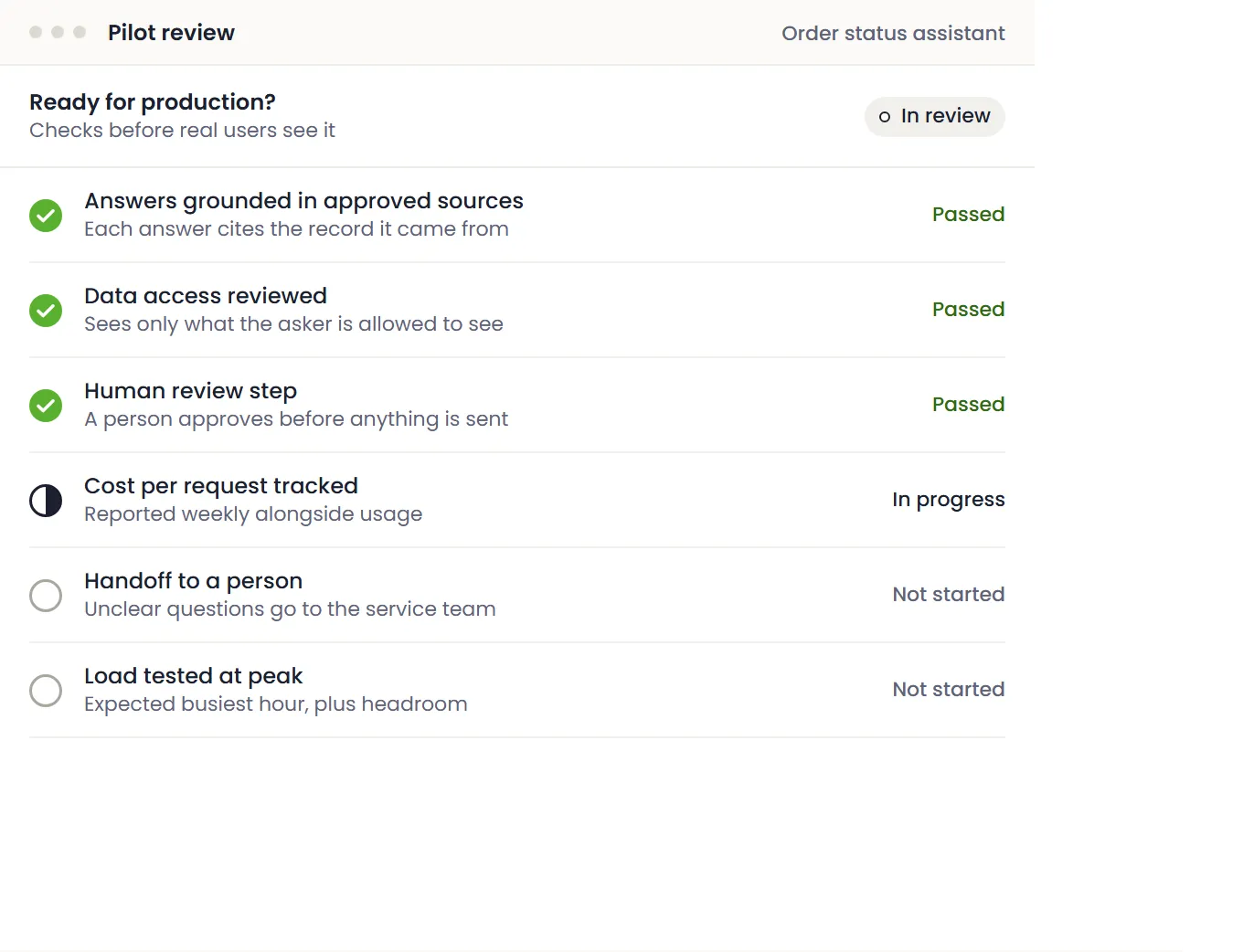
AI should read governed data, not raw copies. We give a model the schema and a written description of what the data means, the same way engineers give coding tools context, and it answers by writing a query against data the person asking is allowed to see. The query comes back with the answer, so it can be checked.
Context for your database: definitions and relationships an AI agent can read
Access rules inherited from the platform, applied to the person asking
Model and query cost tracked before AI workloads scale
Data qualityAutomated monitoring, validation rules and alerting
Data quality frameworks
Quality rules define what good data looks like at the source, check it as it moves through the pipelines and raise failures before they compound. At one health plan, our team noticed a nursing facility file was mishandling records; the plan filed corrections and $16M+ in lost Medicaid revenue came back.
Validation rules, freshness checks and anomaly detection embedded in data pipelines
Data quality scoring and monitoring dashboards for stewards and leadership
Remediation workflows that route quality issues to the right team with context
Lineage and catalogingWhere data comes from, how it transforms and who depends on it
Data lineage and cataloging
When something breaks in a report or a model, the first question is always "where does this data come from?" We implement cataloging and lineage tracking that makes data assets discoverable, documented and traceable from source to consumption.
Automated lineage from Microsoft Purview, Unity Catalog, dbt and Azure Data Factory
Data catalog deployment with business glossaries and ownership mapping
Impact analysis tooling so teams know what downstream systems are affected before making changes
Microsoft Purview
Unity Catalog
dbt
Azure Data Factory
Access controlAccess policies that enforce data classification
Access control architecture
Access that’s too loose is a compliance risk, and access that’s too tight breeds shadow copies and spreadsheets. We match roles to how sensitive each data set is and enforce the rules in the platform itself, with row-level security and masking where PHI or financial data sits.
Role-based access control (RBAC) aligned to organizational structure and data classification
Dynamic data masking and row-level security for sensitive fields (PII, PHI, financial)
Access audit logging and periodic review workflows for compliance reporting
Compliance readinessHIPAA and audit requirements built in
Compliance readiness
We build compliance controls into the data platform, so audit evidence comes from how the platform runs: access logs, lineage and change history are already there when the auditor asks.
HIPAA-governed data environments with PHI tracking, encryption and audit trails
Data pipelines with change management, lineage documentation and access logs
Evidence generation automated from platform metadata for audit and regulatory review
AI governanceGoverned data for assistants and AI agents
Governance for AI on your data
AI should read governed data, not raw copies. We give a model the schema and a written description of what the data means, the same way engineers give coding tools context, and it answers by writing a query against data the person asking is allowed to see. The query comes back with the answer, so it can be checked.
Context for your database: definitions and relationships an AI agent can read
Access rules inherited from the platform, applied to the person asking
Model and query cost tracked before AI workloads scale
Why it comes first
Governed data first, then AI on top
Copilot, agents and AI search answer from whatever they can reach. Before that, the data has to be in one place, checked and limited to what each person is allowed to see. Then the real questions have answers: where did this come from, what’s in it and can we show it’s right?
One governed place
Sources land once, in one platform, instead of being copied into every tool that asks.
Keep the evidence
A raw copy of every source stays put, so a mistake in your logic doesn’t become a permanent mistake in your history.
Access follows the person
A report, an analyst or an AI agent sees only what the person asking is allowed to see.
A curated layer for AI
The checked, business-ready version is what AI reads, so its answers reflect how the business runs today.
Companies that use AI governance put 12x more AI projects into production than those without it. The AI Enablement Guide covers the rest of the research.
We start from what already exists in your environment.
01
01Discovery and architecture review
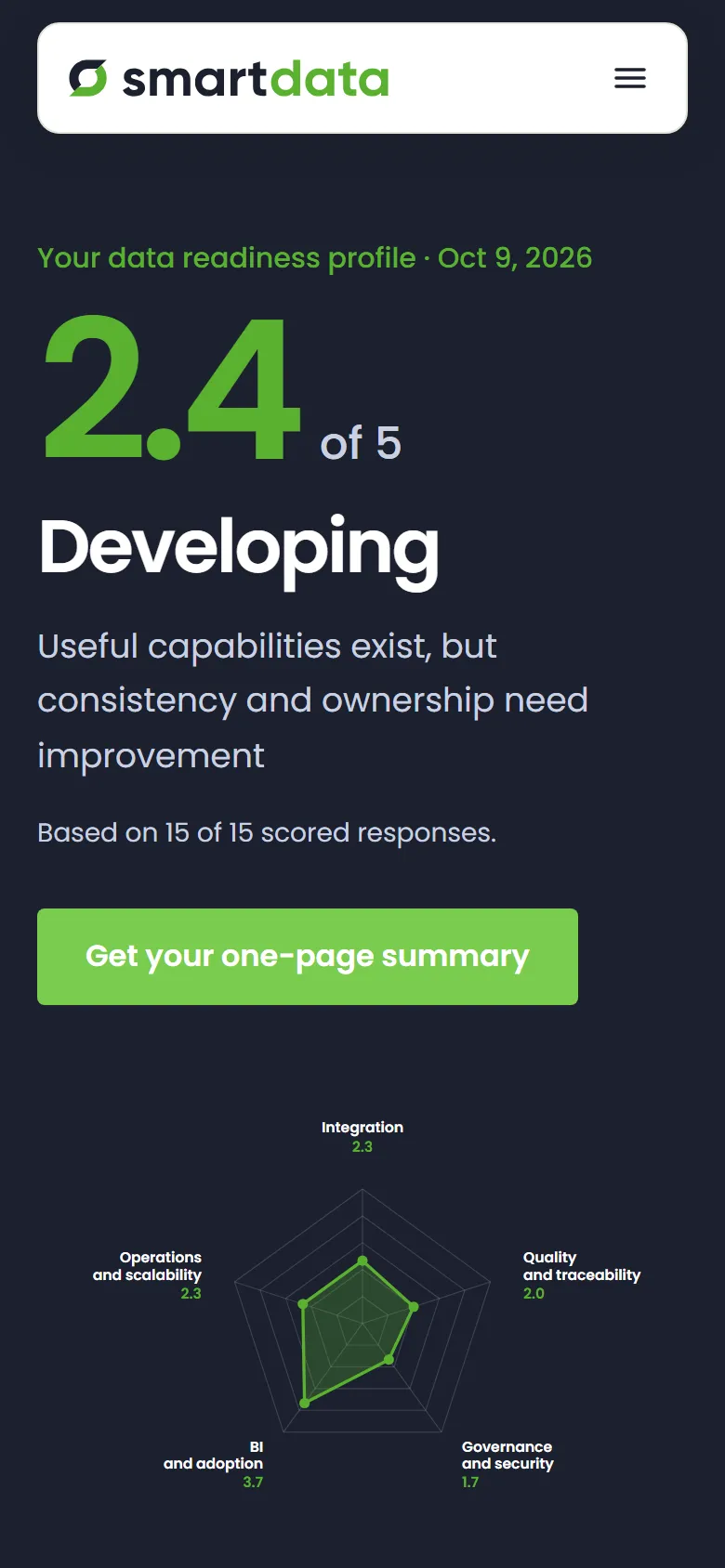
We map your current data sources, pipelines, access patterns and quality baselines, starting from your data readiness assessment if you’ve taken it. The first phase stands on its own: you keep the roadmap whether or not you go further.
Deliverable
A governance maturity scorecard and a prioritized roadmap that identifies the highest-risk gaps.
02
02Policy and framework design
We define data classification schemes, access control models, quality rules and stewardship responsibilities based on what the assessment revealed.
03
03Governance infrastructure build
Quality monitoring in the pipelines, catalog and lineage tooling deployed, access controls configured and compliance evidence generated automatically from platform metadata.
04
04Ongoing support and optimization
Ongoing
We transfer ownership to your internal teams with documented procedures, monitoring dashboards and stewardship workflows in place. Ongoing advisory is available as your data assets grow, regulations change and AI adoption introduces new governance requirements.
Scoped projects, staff augmentation or managed support after launch.See how we deliver
What is the difference between data governance and data management?
Data management is the operational work of moving, storing and transforming data, and governance is the set of policies, roles and controls that keeps that work consistent and measurable. Many organizations have the management in place without the governance layer.
How long does a data governance engagement take?
It depends on the complexity of the data environment and the number of source systems involved. A governance assessment comes first and delivers a maturity scorecard, gap analysis and prioritized roadmap, and the implementation of governance infrastructure (quality monitoring, cataloging, access controls) is scoped from what it finds.
Do we need a data governance tool to get started?
No. Governance starts with your data, classification needs and quality baselines, and the tool choice comes after the requirements are clear. Many organizations already own governance features they barely use, in Microsoft Purview, Unity Catalog, Snowflake or dbt. We use what you have before recommending anything new.
How does data governance relate to AI readiness?
Quality issues, inconsistent definitions and ungoverned access in your data show up in what AI produces from it, so we put governance in place before AI reaches production data.
Do we need governance before using Copilot or AI agents?
At least the basics. An assistant answers from whatever it can reach, so get the data it will read into one governed place, check the quality of what it reads first and make sure access follows the person asking. Start with the sources that matter most to the first use case, not a company-wide program.
What compliance frameworks does Smart Data support?
We build governance aligned to HIPAA (healthcare data and PHI) and to general requirements for data privacy, access management and audit readiness. The approach is the same for each: put the controls in the data platform so evidence is generated automatically.
What if we already have a governance program that is not working?
Many governance programs stall because they focus on organizational change (committees, stewardship roles, policy documents) without building the technical infrastructure to enforce and measure those policies. We assess what exists, identify where enforcement gaps are and build the monitoring and automation layer that makes your existing program operational.



































 Healthcare

 SQL Server


 SSIS
 MuleSoft


 SAP Integration
 Lakehouse Architecture