The platforms are converging.
Snowflake and Microsoft OneLake interoperability is now generally available. Claude for Enterprise has cleared HIPAA. The tooling is ready. The enterprise AI stack, after years of fragmentation, is starting to behave like infrastructure.
But the organizations that bet on tooling breakthroughs solving their AI problems are running into a hard truth: the gaps are not in the models. They are in the data.
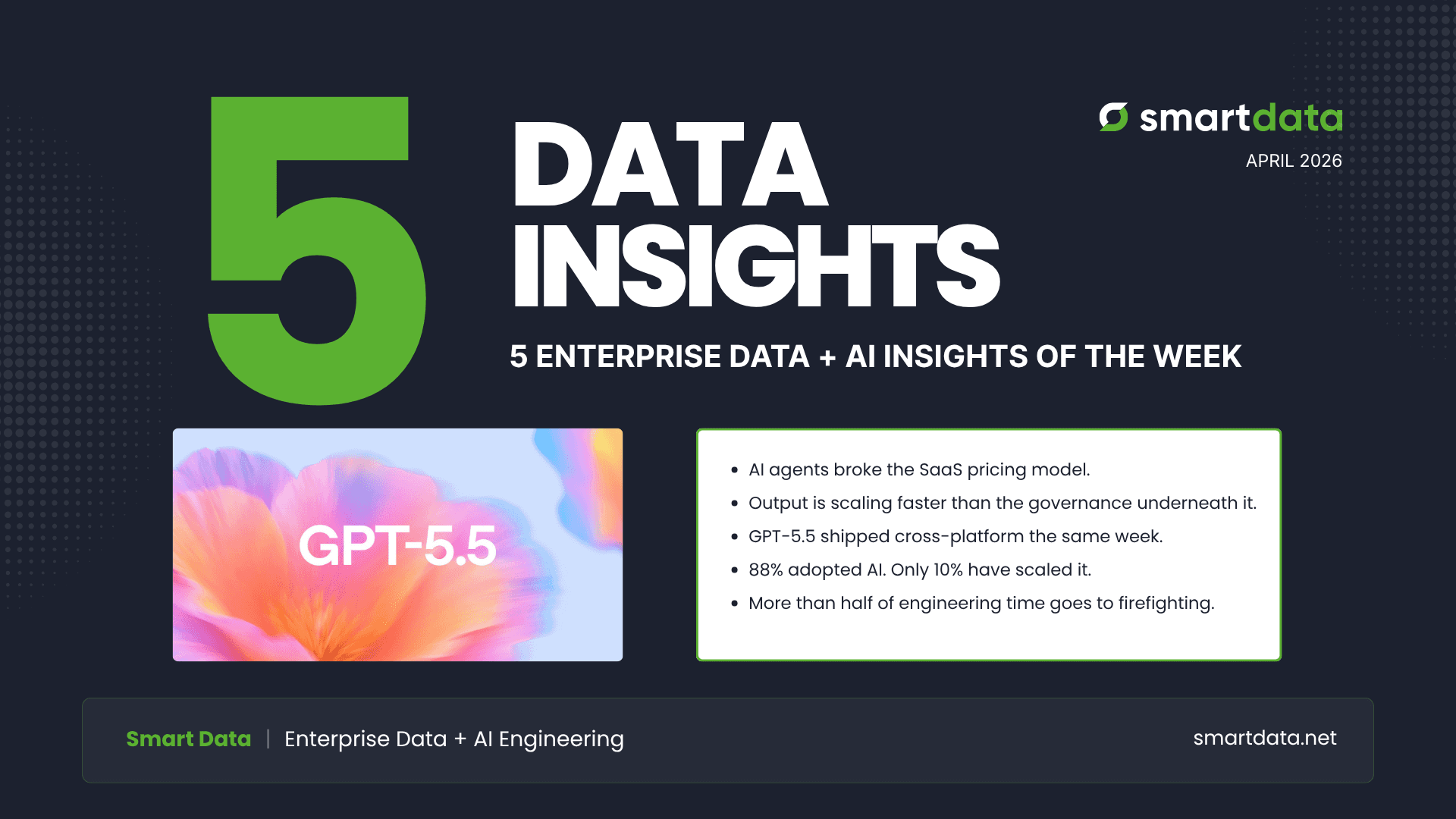
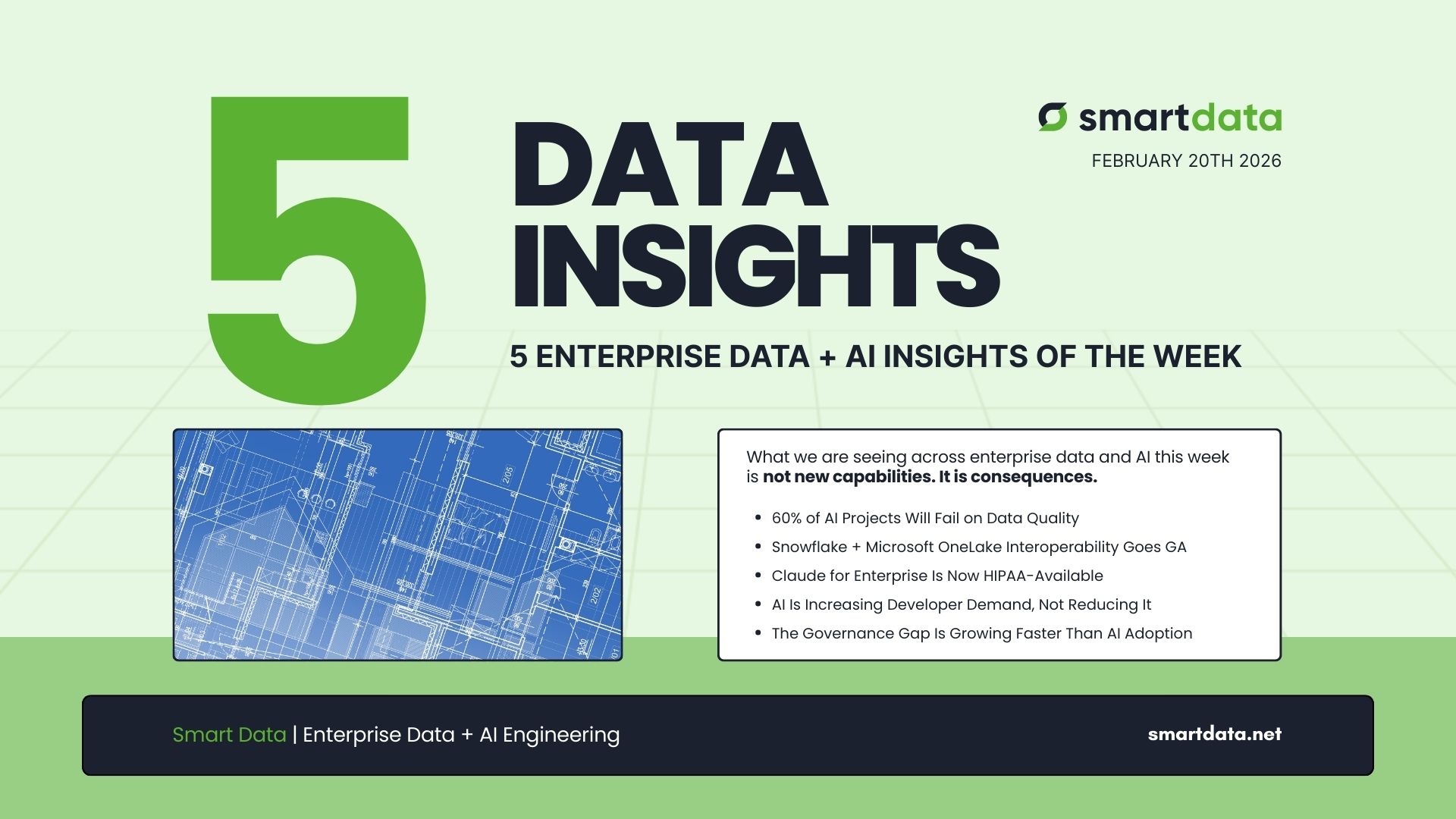
What we are seeing across enterprise AI in early 2026 is not primarily a story of new capabilities. It is a story of consequences, consequences that are arriving from decisions made, and deferred, over the past several years. Five signals shape that story right now. They are worth understanding together.
# 1. The 60% Problem: AI Is Failing on Data, Not Models
Gartner's latest projections put a number on something enterprise teams are already experiencing: through 2026, organizations will abandon 60 percent of their AI projects not because the models failed, but because the underlying data did.
This is a direct indictment of a pattern that has played out across enterprise technology for decades -- infrastructure investment that outpaces data foundation investment. Teams deploy Databricks, stand up Snowflake environments, integrate LLM tooling, and then discover that the data these systems depend on was never ready for what AI demands of it.
What data quality failure looks like in practice is rarely dramatic. It is incomplete source data from EHR systems that were never structured for downstream analytics. It is governance policies that exist in documentation but have never been enforced in pipelines. It is a dozen definitions of "active customer" spread across five systems with no reconciliation layer. None of these problems block a proof of concept. All of them block production.
The proof is not abstract. In one Medicaid payer engagement, a data quality discovery effort surfaced $16 million in recoverable revenue that had been invisible because claims data was inconsistently structured across source systems. The issue was not a lack of analytics capability. It was fragmented data that prevented accurate financial visibility. Only after the underlying platform and data structures were corrected could the organization reliably move forward with downstream analytics and modernization initiatives.
For organizations encountering this pattern, the work typically begins with foundational data engineering and analytics engineering practices that focus on pipeline reliability, modeling consistency, and governance enforcement rather than AI experimentation.
Deferred data problems do not disappear when an AI project starts. They surface as the reason it stalls.
AI does not lower the bar for data quality. It raises it.
#2. Platform Walls Are Coming Down
At Snowflake BUILD in London this week, Microsoft and Snowflake announced that OneLake interoperability is now generally available. Databricks and Microsoft deepened their own OneLake integration during the same period.
For enterprise data teams, the headline is less about the partnership and more about what it enables structurally. Snowflake data is now accessible natively through Microsoft Fabric. Organizations running both platforms no longer need separate data copies sitting in separate governance environments. Shared security layers, reduced duplication, and tighter integration between the Azure ecosystem and Snowflake are no longer roadmap items.
The practical consequence is that the architectural argument for platform siloing, keeping Snowflake environments separate from Fabric pipelines because of integration friction has become harder to make. Teams that invested in interoperable architectures are moving faster as a result. Teams that organized their data strategy around platform loyalty rather than data portability are now in a rebuild cycle.
Platform walls are coming down. The question worth asking internally is whether your data architecture was built for this transition or against it. Organizations that invested in the full stack, Snowflake, Azure Data Factory, dbt, Power BI as a connected system rather than isolated tools, are in a fundamentally different position than those managing them as separate programs.

#3. AI Is Crossing the Compliance Boundary
Anthropic's announcement that Claude for Enterprise is now available to organizations operating under HIPAA is a notable signal, and not primarily because of the model itself.
What the announcement represents is a category shift. AI tooling is no longer sitting at the edge of regulated environments waiting for legal and compliance teams to catch up. It is inside the boundary. Healthcare organizations and financial services teams that have been declining internal AI adoption requests on compliance grounds now have a different answer.
That shift does not simplify the problem. It relocates it.
Compliance was the blocker. Data readiness is the next one. Healthcare organizations that spent the last two years saying "we cannot use AI because of HIPAA" are now being asked to use AI within HIPAA. That requires underlying patient data, clinical data, and claims pipelines that are structured, governed, and quality-controlled to a standard many organizations have not yet reached.
The organizations that have invested in healthcare data infrastructure are in a strong position right now. The ones that deferred that investment while waiting for compliance clarity have less runway than they think.
Compliance is no longer the blocker. Data readiness is.

#4. AI Is Creating More Engineering Work, Not Less
Prashanth Chandrasekar, CEO of Stack Overflow, published an analysis in February 2026 that is worth reading carefully by anyone in enterprise technology leadership who has been tracking the question of what AI means for engineering headcount.
His argument frames AI as a platform shift, the same category of change as the internet, mobile computing, and cloud infrastructure. The pattern across each prior shift is consistent: the arrival of a new platform creates near-term displacement concerns and then expands the total surface area of software faster than teams can keep pace. More software gets built. More integrations are required. More systems need maintaining. Demand for experienced engineers who can work at the system level (architecture, integration, reliability) grows rather than shrinks.
The current moment follows this pattern. AI is lowering the cost of generating code, which means more software is being built. New layers of the stack are emerging at every level: model infrastructure, orchestration frameworks, AI-native applications. Adoption is fracturing across legal technology, financial services, manufacturing, and education, each requiring integration into existing enterprise systems that were not designed with AI in mind.
More AI software means more integration work. More integration work means more demand for engineers who understand how systems connect, where they fail, and how to build for production rather than demonstration.
The teams seeing the most demand are not those that can generate code quickly. They are senior engineers who understand the systems that new AI software has to connect to, govern, and integrate with. That distinction matters for how organizations plan their engineering capacity over the next two to three years.

# 5. The Governance Gap Is Widening Faster Than AI Adoption
Of all the signals worth watching right now, this one carries the most forward risk.
AI adoption is accelerating fastest in the parts of organizations with the least mature governance. That is not a coincidence. Shadow AI usage expands precisely because governance oversight slows things down. Teams working outside IT visibility move faster in the short term. Multi-cloud sprawl compounds the problem as security teams stretch to cover an expanding perimeter that was not designed for AI workloads.
The EU AI Act enforcement cycle begins in 2026. AI governance frameworks exist in many organizations on paper -- in policy documents and board presentations. Fewer exist in actual pipeline architecture, access controls, or monitoring systems built to track AI behavior at runtime.
The gap between governance as policy and governance as practice is where enterprise AI risk is accumulating right now.
Governance gaps rarely appear during experimentation. They appear during incidents. A model running without an ownership assignment, an agent making decisions that cannot be traced, an AI workflow integrated into a process that was already fragile - these situations produce consequences that are visible, expensive, and external. Organizations addressing this proactively are embedding governance directly into pipeline design and AI delivery workflows, often through structured enterprise AI implementation frameworks that combine readiness assessment, controlled experimentation, and production governance.
That gap does not close on its own. It requires deliberate architecture decisions made before the urgency of an incident forces the issue.
What This Confirms
Enterprise AI is splitting into two tracks.
Organizations with strong data foundations, platform-interoperable architectures, and governance built into their pipelines are accelerating. They are the ones moving from experimentation to production.
They are the ones whose AI programs are generating measurable outcomes.
Everyone else is accumulating risk.
The gap between these two groups is widening faster than most teams realize, because the feedback loop in enterprise data is slow. Problems deferred in 2023 and 2024 are surfacing now. Projects that appeared on track are hitting the data quality wall at the moment they needed to scale.
What the organizations making progress have in common is not better models. It is better foundations. Data quality treated as an ongoing operational discipline, not a pre-project checklist. Platform architecture designed for interoperability, not locked around a single vendor relationship. Governance embedded in pipelines rather than documented in policy. Experienced engineering teams who understand that AI expands the surface area of software problems rather than eliminating them.
If your organization is evaluating its AI readiness right now, the right conversation is about foundations, not tooling. The tooling is ready. The question is what it has to work with.
Still Evaluating AI?
Start With Clarity.
If you’re not ready for a sales conversation, this is a good place to begin. We’ve outlined the key questions organizations should answer before starting an AI initiative.
It’s the same framework we use with our clients.
Frequently Asked Questions
Why do most enterprise AI projects fail?
The most commonly cited reason is data quality, not model performance. Gartner projects that 60 percent of AI projects will be abandoned through 2026 due to insufficient data quality. The failure pattern typically involves data that was never structured for AI workloads, governance policies that exist on paper but not in pipelines, and source systems that produce inconsistent or incomplete records at scale. A working proof of concept does not reveal these problems. A production deployment does.
What does Snowflake and Microsoft OneLake interoperability mean for enterprise data teams?
The general availability of Snowflake and OneLake interoperability allows Snowflake data to be accessed natively through Microsoft Fabric without duplicating data across platforms. For organizations running both, this reduces governance complexity and enables shared security layers. It also removes a primary architectural argument for keeping the two ecosystems separate -- which means teams that built for interoperability are positioned to move faster than those that did not.
How does the governance gap affect enterprise AI production readiness?
Most AI governance failures surface during production incidents, not during experimentation. Shadow AI usage, undefined model ownership, and absence of decision traceability are common in organizations where AI adoption has outpaced governance infrastructure. The EU AI Act enforcement cycle beginning in 2026 adds regulatory exposure to what was previously an operational concern. Organizations that build governance into architecture before production deployment are in a materially different risk position.
How does AI affect demand for experienced software engineers?
According to Stack Overflow CEO Prashanth Chandrasekar's February 2026 analysis, AI follows the same pattern as prior platform shifts in expanding rather than contracting the surface area of software development. Lower code generation costs mean more software gets built, which increases demand for system-level engineering, integration work, and reliability engineering. These roles require experienced practitioners(engineers who understand how enterprise systems connect and fail) rather than code generation speed alone